Sunset Kayaking Korcula – Evening Paddle from Soline to the Archipelago
Sunset kayaking from Soline is one of the most memorable ways to spend an evening on Korcula island. You paddle out across calm water as the afternoon heat fades, reach the small islands of the archipelago as the light starts to change, watch the sun drop behind the Pelješac mountains from the sea, then paddle back to shore in the dusk with the sky still holding colour behind the peaks. No roads, no crowds, no noise beyond the water and the paddles. Just the archipelago at the best hour of the day.
Why Sunset is the Best Time to Kayak the Archipelago
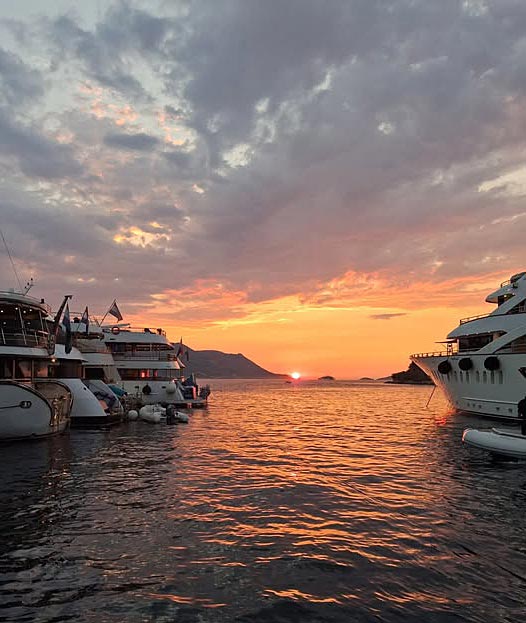
Korcula faces west across the Pelješac channel — which means the island is perfectly oriented for sunsets. The Pelješac mountains catch the last light, and the channel water reflects the colours back across the archipelago. From a kayak at water level, sitting between the islands as the sky changes from gold to orange to pink, the effect is considerably more immediate than watching the same sunset from a bar terrace or a clifftop.
1 tours found
Lumbarda-Sunset Kayaking Experience with picnic: Wine and Sweets

Spirit of Korkyra is a small, family-run business - not a franchise. Boris and Ivka built it from scratch, and Ivka grew up right here in Lumbarda. We time this tour to end golden hour on the water - paddling past Vrnik's old stone quarries and Badija's monastery and free-roaming deer, before finishing at Gubavac as the light turns for sunset. It's the same route as our morning tour, but the light and pace make it a completely different experience. Gubavac itself isn't reached by taxi boats or big group tours, so you get it quiet, with homemade Grk wine from our own family production in Lumbarda and traditional Klašun pastries to end the evening. With a max of 10 guests, we adjust the pace to the group - this isn't a fixed script, it's shaped around who's paddling with us that evening.
We may earn a commission if you book through links on this page, at no extra cost to you. EUR/GBP prices are approximate conversions; exact price and currency are confirmed on Viator at checkout.
The practical conditions also favour the late afternoon. The Maestral — the afternoon north-westerly that picks up across the Pelješac channel in summer — typically fades around sunset, leaving the water calm just as the light becomes most interesting. The inner channels of the archipelago stay sheltered throughout the day, but the water between the islets takes on a particular quality in the hour before dark that morning paddling cannot match.
The islets themselves are quieter in the late afternoon. The water taxi visitors who filled Badija and Vrnik through the middle of the day have returned to Korcula Town. By 5 pm the archipelago is largely back to its normal unhurried state — a handful of boats at anchor, the deer on Badija wandering the paths undisturbed, the pine forest quiet.
Why Launch from Soline
Soline bay sits about 4km east of Korcula Town on the road towards Lumbarda, directly opposite Badija and the main cluster of Škoji islets. For a sunset session it is the ideal starting point — Badija is 10-15 minutes paddling for a complete beginner, which means you arrive at the islands with plenty of evening ahead rather than spending the best light in transit.
The bay itself is sheltered and calm, with a pebble and rock shoreline that makes launching straightforward. The water clarity at Soline is excellent — and the bay has an additional feature that makes it unlike any other kayaking launch point in Croatia: a 7,000-year-old Neolithic underwater settlement lies just below the surface, with stone walls visible at 4-5 metres depth on a clear day. Paddling out over it at the start of a sunset session, with the light already beginning to warm, is an unusual way to begin an evening on the water.
Road access to Soline is straightforward, and parking is available at the bay. By car from Korcula Town, it is about 10 minutes.
What a Sunset Kayak Session Looks Like
A typical sunset session from Soline runs from around 4:30-5 pm until dark — roughly three to four hours depending on the season. Sunset in summer (June to August) falls between 8 pm and 8:45 pm; in September around 7:15 pm. Plan to be on the water at least two hours before sunset to make the most of the changing light across the full sequence rather than just the final 20 minutes.
Popular Routes: Split to Korcula, Korcula to Split, Dubrovnik to Korcula, Korcula to Dubrovnik
The natural route from Soline takes you first to Badija — the largest islet, with its Franciscan monastery, pine forest and wild fallow deer. Time a swimming stop here while the afternoon heat is still on the water. Then paddle further into the archipelago as the light begins to change — Vrnik, Stupe or Planjak depending on conditions and how far you want to go. Find a quiet spot on a pebble beach or a flat rock facing west, sit with the water in front of you and the Pelješac mountains on the horizon, and watch the sun go down.
The paddle back to Soline in the dusk is often the part people remember most. The sky holds colour for a long time after the sun drops — soft pinks and purples reflected in the channel — and the outline of Korcula Old Town is visible to the west as you return. Arrive back at the shore as the first stars appear.
What to Bring
- Swimwear — the afternoon swimming stop is the best part of the session, don’t skip it
- A light layer — temperatures drop noticeably after sunset on the water, even in July. A thin windproof or fleece for the return paddle is worth having
- Water shoes — useful for landing on rocky islet shores
- Sun protection — hat, sunglasses and sunscreen for the early part of the session when the sun is still strong
- Dry bag — for your phone and anything else that cannot get wet
- Water and snacks — three to four hours on the water requires food and hydration
- Snorkel mask and fins — the Neolithic site at Soline and the rocky bases of the islets are both worth snorkelling. Bring your own rather than relying on hire availability
- A headtorch — the return paddle in dusk is manageable without one but having a light is good practice and makes you more visible to any passing boats
Is it Suitable for Beginners?
Yes — the conditions at Soline and in the inner channels of the archipelago are as forgiving as sea kayaking gets. The water is calm, the distances are short, the islets provide natural shelter and there are landing spots on every island if you need to rest. Basic upper body fitness is sufficient — you do not need previous kayaking experience to paddle from Soline to Badija and back comfortably.
The main consideration for beginners is the return paddle in fading light — stay aware of the route back to Soline and do not push further into the outer archipelago than you are comfortable paddling back from in the dark. The inner channel between Soline and Badija is straightforward to navigate at dusk; the outer islets require more confidence.
Families with children can manage the session comfortably in double kayaks — the pace is entirely self-set and the stops on Badija give children time to explore on foot, look for deer and swim in calm water before the next paddle.
Weather and Conditions
Check the forecast before setting out. The Croatian Meteorological and Hydrological Service at meteo.hr gives reliable local wind and weather forecasts. Do not paddle in Bura — the cold north-easterly that sometimes blows in from the mainland — regardless of experience level. A moderate Siloko (south-easterly) creates swell on the outer edges of the archipelago, but the inner channels remain manageable.
The best sunset kayaking conditions are a light Maestral fading through the afternoon and a partly cloudy sky on the western horizon — clouds catch and amplify the sunset colours in a way that a completely clear sky does not. A totally overcast sky produces little colour. If the forecast shows clear skies or a fading afternoon breeze, conditions will be excellent.
Best Months for Sunset Kayaking
June and September are the best months — warm enough for comfortable swimming, significantly quieter on the islands than July and August, and the light at golden hour in both months is exceptional. The September sunset comes earlier (around 7:15pm), which suits those who prefer not to be paddling after dark.
July and August work well from a weather perspective but the islets are busier during the day — by sunset most visitors have left, so the evening session is still good. The later sunset in midsummer (approaching 9pm) means a longer session is possible if you want it.
Related Pages
- Kayaking on Korcula island — complete guide including hire and best routes
- Kayaking from Soline — why Soline is the best launch point for the archipelago
- Kayaking the Korcula archipelago — detailed guide to each islet and suggested routes
- Korcula archipelago — full guide to the Škoji islets
- Sunset spots on Korcula — other places to watch the evening sky on the island