Kayaking the Korcula Archipelago – Guide to the Škoji Islets by Kayak
The Korcula archipelago — locally called Škoji, pronounced ‘shkoyee’ — is the best kayaking destination on the island and one of the finest sea kayaking areas on the entire Dalmatian coast. Twenty or so small islands, islets and reefs sit between Korcula Town and Lumbarda, all within paddling distance of the shore, with water that is consistently clear and calm, coastline that changes character from one islet to the next, and enough historical and natural interest on each one to make stopping worthwhile rather than just paddling past. This page covers the archipelago specifically from a kayaker’s perspective — which islets to visit, what to expect on the water, how to plan your day and what the conditions are like at different times of year.
Why the Archipelago is Perfect for Kayaking
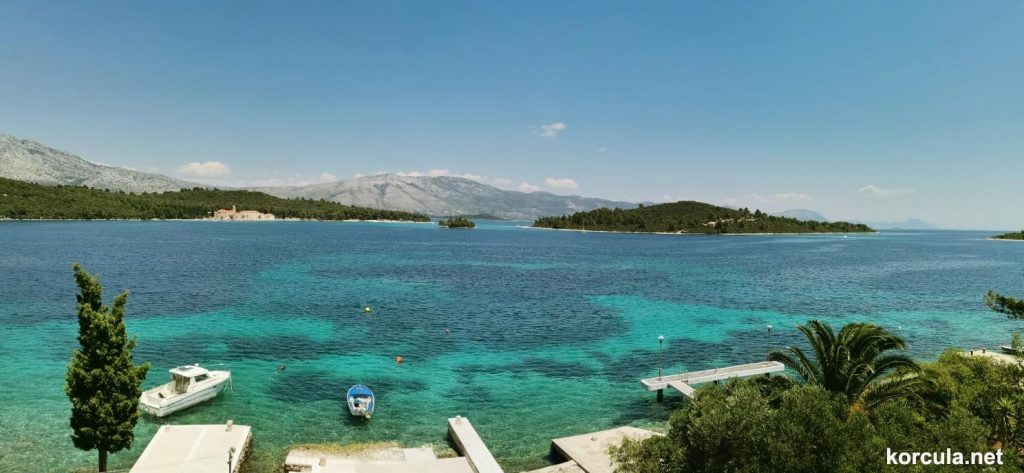
The geographical arrangement of the Škoji islets creates a natural kayaking environment that is hard to find elsewhere. The islands sit close together in a relatively sheltered channel between Korcula and Lumbarda, which means the water between them stays calmer than the open Pelješac channel to the north. You paddle in the shelter of one island, cross a short open stretch to the next, and are back in sheltered water within minutes. The distances between islets are short enough for complete beginners, but the total area is large enough for experienced paddlers to spend a full day exploring without covering the same ground twice.
The water quality is consistently excellent — clear, clean and with good visibility for snorkelling around the rocky shorelines of each islet. The islets themselves are covered in Mediterranean pine and have no roads, no cars and almost no development beyond the monastery on Badija and a few small seasonal restaurants. Paddling between them feels genuinely remote despite being within sight of Korcula Town.
The Best Starting Points
Where you launch from determines how much of the archipelago you can comfortably reach in a session:
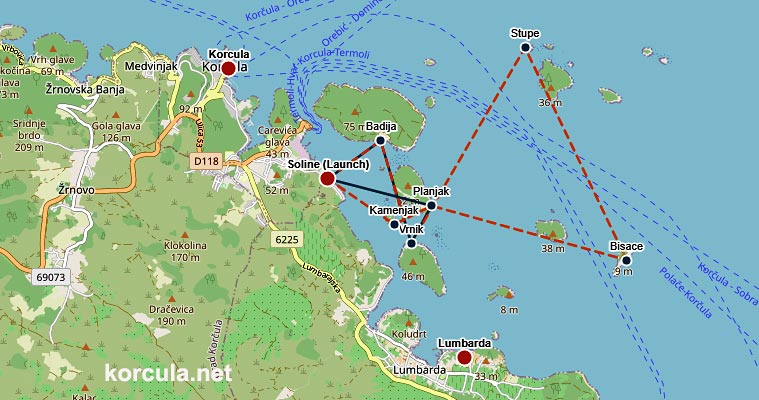
- Soline bay — the best starting point for kayaking in the archipelago. A sheltered bay about 4km east of Korcula Town, directly opposite Badija and the main cluster of islets. Badija is 10-15 minutes paddling from Soline for a beginner. The bay has calm, clear water and an easy pebble launch point. An added attraction: a 7,000-year-old Neolithic underwater settlement lies in the bay — visible by snorkel at 4-5 metres depth. Full details on kayaking from Soline.
- Lumbarda — the main departure point for commercial kayak tours. Good access, facilities nearby, slightly further from the islets than Soline but still very manageable. The sunset kayak tours depart from here
- Korcula Town east pier — possible for paddlers wanting to start from the town itself. Slightly more exposed than Soline or Lumbarda due to boat traffic in the harbour area. The water taxi route crosses from here, so be aware of vessels coming and going.
Map
The Islands — What to Expect at Each
Each islet in the Škoji group has a distinct character. Here is what kayakers will find at the main ones:
Badija — The Essential Stop
Badija is the largest islet in the archipelago and the most visited. Its landmark is a 14th-century Franciscan monastery — Gothic-Renaissance architecture rising above the pine trees, visible from the water as you approach. A small population of wild fallow deer lives on the island and wanders the pine forest paths with little concern for human visitors. Several good pebble beaches sit around the island with exceptionally clear water. A small seasonal restaurant operates near the monastery landing point.
From a kayaker’s perspective, Badija offers easy landing spots, shade from the pine forest, swimming in sheltered water, and enough to explore on foot to justify a proper stop rather than a quick swim. The circular walking path around the monastery takes about 30 minutes. Paddling around the full perimeter of the island in a kayak takes about the same time and reveals coastline and swimming spots that the water taxi passengers never reach. The north side of the island — facing away from Korcula Town — has quieter beaches and better snorkelling.
Vrnik — The Stone Island
Vrnik is the only inhabited island in the archipelago — a small community of permanent residents on an island historically known for its stone quarry. The same pale limestone quarried on Vrnik was used to build parts of Dubrovnik and other Dalmatian towns, and the old quarry workings are visible on the island’s southern shore. A small restaurant operates in summer. The beaches are pebble with good water clarity and snorkelling around the rocky base of the quarry walls reveals interesting underwater topography.
Popular Routes: Split to Korcula, Korcula to Split, Dubrovnik to Korcula, Korcula to Dubrovnik
Stupe — Quiet Swimming
Stupe is a small uninhabited islet close to Korcula Town with good pebble beaches and clear water. Less visited than Badija and Vrnik — the water taxi runs there less frequently — which means it tends to be quieter even in peak season. A good stop on a longer paddling day when Badija feels crowded. Small seasonal restaurant on the island.
Planjak — Off the Main Route
Planjak is one of the quieter islets in the group — uninhabited, no facilities, and off the main water taxi route, which means it sees fewer day visitors. Pebble and rocky beaches with good snorkelling. A good choice for paddlers wanting to get away from the more visited spots. The crossing from Soline or Lumbarda is straightforward in calm conditions.
Kamenjak and Sutvara — The Outer Islets
On the outer edges of the archipelago, Kamenjak and Sutvara are rocky islets with limited beach but excellent snorkelling around their bases. Sutvara sits on the eastern edge of the group near Lumbarda — a natural last stop on a Lumbarda-based paddling circuit. Both are uninhabited and rarely visited. Water here is particularly clear due to the slightly more exposed position and stronger water movement.
Bisace — The Far Islet
Bisace is the furthest islet from the shore — positioned directly across from Cape Raznjić at the eastern tip of Korcula. It is known locally for its large seagull colony and a single pine tree that provides the only shade on the island. Not a comfortable destination for casual paddlers due to the distance and more exposed crossing, but worth knowing about for experienced kayakers wanting to reach the outer edge of the archipelago.
Suggested Kayaking Routes
Routes depend on your starting point, fitness level and how much time you have. Here are three practical options:
- Beginner half-day from Soline — paddle to Badija (10-15 minutes), spend an hour exploring the island and swimming, paddle around the perimeter to the north side for snorkelling, return to Soline. Total paddling time about 1.5 hours; total outing 3-4 hours with stops. Straightforward for anyone with basic fitness.
- Intermediate half-day from Soline or Lumbarda — Badija, then Vrnik, then Stupe or Planjak, then return. Covers three islets with swimming stops at each. Total paddling time about 3 hours; total outing 5-6 hours. Comfortable for anyone who has paddled before.
- Full day from Soline — full circuit of the main archipelago including Badija, Vrnik, Stupe, Planjak, Kamenjak and Sutvara. Lunch stop on Badija or Vrnik (both have seasonal restaurants). Total paddling time 5-6 hours; a long day but not extreme. Suitable for regular paddlers or those on a guided full-day tour.
Snorkelling in the Archipelago
The archipelago is one of the better snorkelling areas near Korcula Town. The combination of rocky islet bases, clear water and minimal boat traffic in the inner channels creates good conditions for seeing marine life. Sea urchins, octopus, grey mullet and wrasse are all common. The rocky sections on the less-visited sides of each islet — away from the main landing beaches — consistently offer better snorkelling than the beaches themselves. Bring a mask and fins and plan snorkel stops into your paddling itinerary rather than treating them as an afterthought.
One unique addition: the underwater Neolithic settlement at Soline bay — a 7,000-year-old submerged village with stone walls visible at 4-5 metres depth — makes Soline the most remarkable snorkelling location in the area. Paddle out from the launch point, anchor your kayak and drop down for a look before heading to the islets.
Conditions and Wind
The inner channels of the archipelago are sheltered from the Maestral — the summer afternoon north-westerly — which makes them more comfortable to paddle in the afternoon than the open Pelješac channel. Morning conditions are calmest across the whole area. The Bura — cold north-easterly — reaches the archipelago directly and should be taken seriously: do not paddle in strong Bura conditions regardless of your experience level. The Siloko (south-easterly) creates longer swell that rolls through the outer edges of the archipelago — stay in the inner channels in Siloko conditions.
Always check the weather forecast before paddling. The Croatian Meteorological and Hydrological Service — meteo.hr — gives reliable local forecasts including wind strength and direction. If in doubt, stay close to shore and turn back early rather than pressing on into deteriorating conditions.
Best Time of Year
June and September are the best months for kayaking in the archipelago — water temperature is comfortable for swimming (22-24°C), the islets are significantly quieter than in peak summer and the light in the early morning and late afternoon is at its best. July and August are busier on the main islets, particularly Badija which receives water taxi visitors throughout the day, but the outer islets remain quiet even in peak season.
April and May are possible for experienced paddlers — water temperature is lower, but conditions can be excellent, and the archipelago is empty. October is similarly quiet with reliable weather in the early part of the month.
Guided Tours vs Independent Kayaking
Both work well in the archipelago — the decision depends on your experience and what you want from the day.
- Guided tours are recommended for beginners, solo paddlers, families with children, or anyone who wants local knowledge about the islets, their history and the best spots. Guides carry safety equipment and know the conditions well. The sunset tour from Lumbarda is the most popular guided option.
- Independent kayaking suits experienced paddlers who want to set their own pace and route. Hire a kayak, check the forecast, start early and stay in the inner channels. Tell someone where you are going and when you expect to return.
4 tours found
Bits of History - Half day kayak Tour with Wine delight

Spirit of Korkyra is a small, family-run business - not a franchise. Boris and Ivka built it from scratch, and Ivka grew up right here in Lumbarda. We take you to places bigger tours can't reach, like Gubavac, an island not visited by taxi boats or large groups. On the way, you'll see Vrnik's centuries-old stone quarries and Badija's monastery and free-roaming deer - a mix of history, nature, and quiet coastline in one trip. What you eat and drink along the way is genuinely homemade: Grk wine from our own family production in Lumbarda, and Klašun pastries made from a traditional family recipe. Nothing store-bought, nothing generic. With a max of 10 guests, we adjust the pace and stops to the group - this isn't a fixed script; it's a tour shaped around who's paddling with us that day.
Lumbarda-Sunset Kayaking Experience with picnic: Wine and Sweets

Spirit of Korkyra is a small, family-run business - not a franchise. Boris and Ivka built it from scratch, and Ivka grew up right here in Lumbarda. We time this tour to end golden hour on the water - paddling past Vrnik's old stone quarries and Badija's monastery and free-roaming deer, before finishing at Gubavac as the light turns for sunset. It's the same route as our morning tour, but the light and pace make it a completely different experience. Gubavac itself isn't reached by taxi boats or big group tours, so you get it quiet, with homemade Grk wine from our own family production in Lumbarda and traditional Klašun pastries to end the evening. With a max of 10 guests, we adjust the pace to the group - this isn't a fixed script, it's shaped around who's paddling with us that evening.
Korcula Half Day Guided Kayak Tour with Local Delicacies

Some describe the middle and south Dalmatian coast of Croatia as the European Polynesia. The archipelago between Korcula and Lumbarda is special even by those standards. In this magical, secluded area you can paddle above a prehistoric archeological site, see a Franciscan monastery from the 14th century, visit quarries dating from the times of ancient Romans, enjoy beautiful, uncrowded pebble beaches and snorkel in a turquoise water. During a break you'll taste traditional local sweets and liqueur. To complete the experience, our knowledgeable and friendly kayak guide will take you around this amazing nature and its dynamic history through the art of storytelling.
Korcula Island Private Sea Kayaking Tour with lunch

Sea kayaking private tour around Korcula island archipelago and its dozens of small islets. Snorkel in crystal clear sea and try hand-picked sea urchin caviar on the spot with our skipper. Visit Badija and Vrnik Islets with its churches and monasteries from the 14th century. Itinerary: 10.00-10.15 – Private Van transfer to Lumbarda Village 10.15.- 10.30 – Briefing and safety instructions 10.30.-11.00 – Sea kayaking to Vrnik Islet 11.00.-11.30 – Short walk on the islet and visit to the church and the stone quarries 11.30.-12.00 – Sea Kayaking to Planjak Islet 12.00.-13.00 – Free time for swimming, snorkeling, and refreshment 13.30.-13.45 – Sea kayaking to Lumbarda 14.00.-14.15 – transfer to Hotels
We may earn a commission if you book through links on this page, at no extra cost to you. EUR/GBP prices are approximate conversions; exact price and currency are confirmed on Viator at checkout.
Related Pages
- Kayaking on Korcula island — complete guide including hire, tours and advice
- Kayaking from Soline — the best launch point for the archipelago
- Sunset kayaking Korcula — evening guided tour from Lumbarda
- Korcula archipelago — full guide to the Škoji islets including water taxi and boat hire
- Lumbarda — departure point for some sunset kayak tours
- Boat hire on Korcula — alternative to kayaking for exploring the archipelago