Planjak Island, Korcula – Quiet Pebble Beaches in the Archipelago
Planjak is a small uninhabited island in the Korcula archipelago, sitting directly south-east of Badija across a short stretch of open water. It is one of the quieter destinations in the Skoji group — no restaurant, no water taxi service, no facilities of any kind — which means it sees far fewer visitors than Badija, Vrnik and Stupe even in peak summer. What it has is three pebble beaches, large areas of smooth rock good for sunbathing, clear water and the kind of solitude that the more serviced islets cannot offer. The stone quarries on Planjak — historically significant, now long abandoned — add an archaeological layer that most visitors never know about.
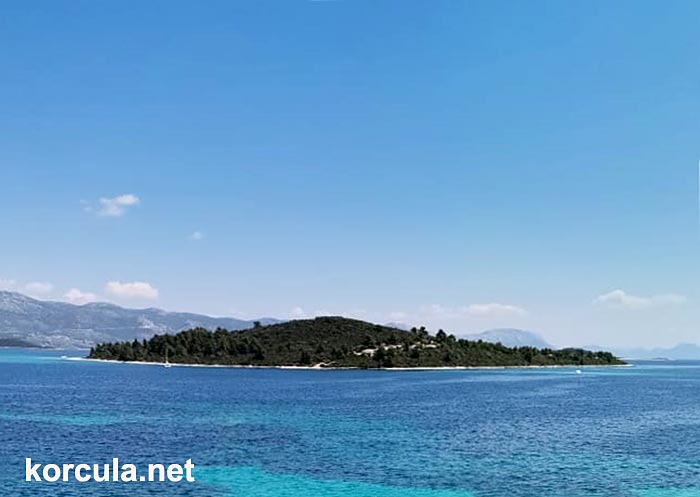
The Beaches
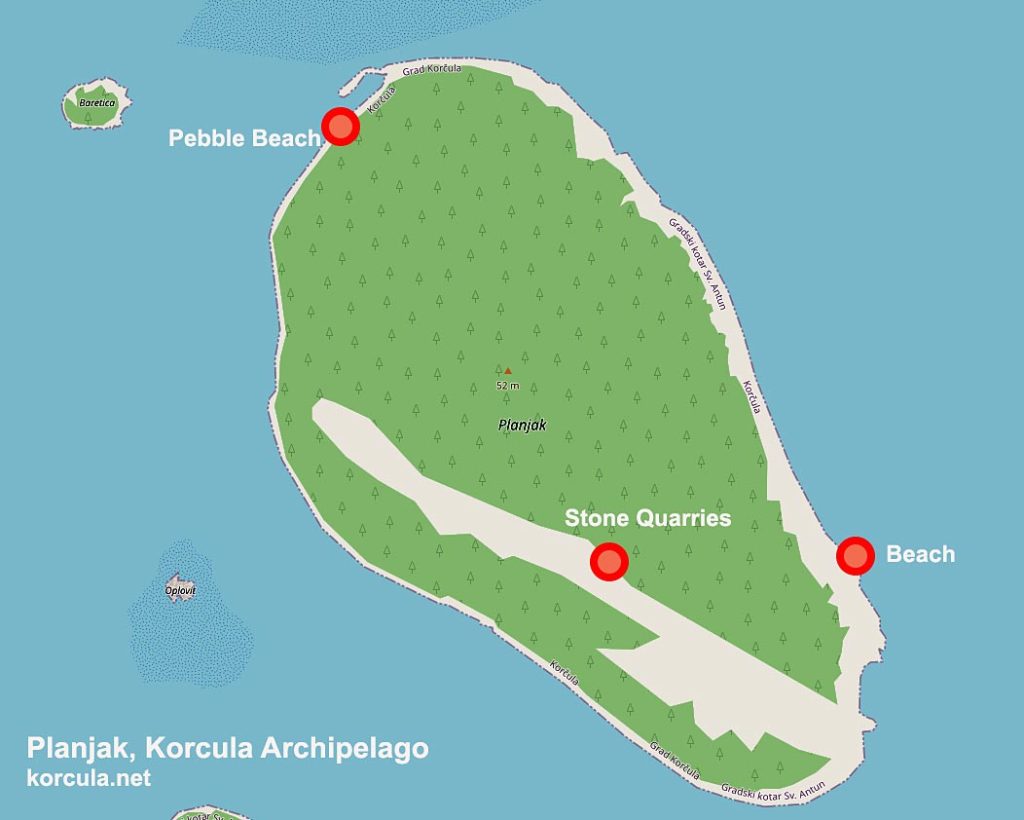
Planjak has three distinct beaches. The most visible from the water is the western beach — a pebble shore easily spotted when approaching from Korcula Town, sheltered and calm in most conditions. This is the natural landing point and the beach most people use.
More interesting is the eastern beach, facing Vrnik and Stupe. This beach is effectively hidden — carved into the rocks rather than sitting openly on the shoreline, which means it is invisible until you are almost upon it. The eastern side of Planjak is exposed to the Siloko south-easterly wind, which over centuries has shaped the pebbles here into something unusual: white, clean, perfectly rounded stones eroded by the force of repeated storms into a beach with a different texture and colour from the western side. Worth seeking out specifically rather than just using the first beach you reach.
Two smaller beaches sit on the southern coast with uninterrupted views across the open archipelago towards Lumbarda and the Raznjić cape.
The Stone Quarries
Planjak was one of several islets in the Korcula archipelago actively quarried for limestone from antiquity through to the 20th century. The same high-quality Cretaceous limestone found across the Skoji group — used to build Dubrovnik, Istanbul, Venice, Budapest and Zagreb — was extracted from Planjak’s hillsides alongside Vrnik, Sutvara, Kamenjak and Badija. The quarry workings on Planjak are overgrown and less obvious than those on Vrnik but visible to anyone who walks beyond the beach into the island’s interior. A reminder that these quiet, uninhabited islands were once working industrial sites.
Wind and Conditions
The western side of Planjak is well sheltered from the Maestral and Bura, making it a reliable calm-water destination on most summer days. The eastern and southern sides are exposed to the Siloko — do not anchor or swim on the exposed side in south-easterly conditions. The island’s position in the inner archipelago provides reasonable shelter overall, though its smaller size means less protection than Badija offers.
Getting to Planjak
No water taxi serves Planjak directly. Reaching it requires your own boat, a hired boat from Korcula Town, or a kayak from Soline or Lumbarda — both a manageable paddle in calm conditions. The western beach has a natural landing point suitable for small boats and kayaks. This is part of what keeps Planjak quiet — the extra effort required to reach it is its own filter. If you are kayaking the archipelago, Planjak makes a natural stop after Badija on any route going further east.
Related Pages
- Korcula archipelago — complete guide to all Skoji islets
- Badija island — the nearest large islet, 10 minutes by boat
- Vrnik island — the inhabited island with the famous stone quarries
- Kayaking the archipelago — Planjak on the full-day kayak route from Soline
- Boat hire Korcula — hire a boat to reach Planjak independently
Popular Routes: Split to Korcula, Korcula to Split, Dubrovnik to Korcula, Korcula to Dubrovnik