Istruga Beach, Korcula – Sandy Bay with Therapeutic Mud on the South Coast
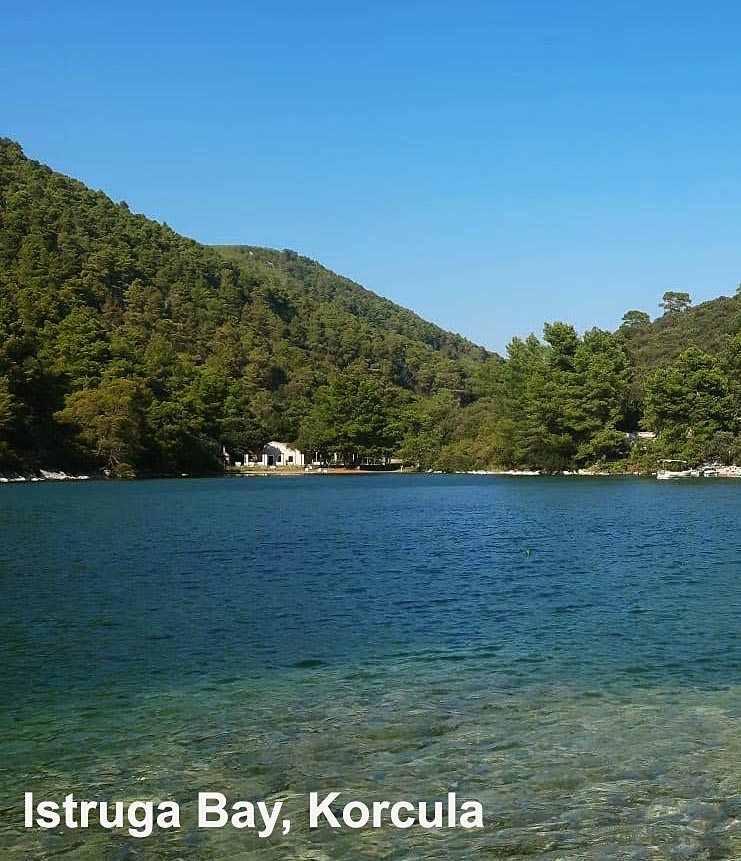
Istruga is a small sandy bay about 1.5 kilometres west of Brna on the south coast of Korcula, separated from the main Brna bay by the Mali Zaglav peninsula. It is one of the few genuinely sandy beaches on the western part of the island and the only beach on Korcula known for its therapeutic mud – a six-metre-thick deposit of dark peloid sediment covering the seabed that has been attracting visitors for its perceived medicinal properties for generations. Whether you come for the mud or simply want a sandy beach in a pine-shaded bay away from the busier spots, Istruga is worth knowing about.
The Mud – What it is and What it Does
The defining feature of Istruga is not the sand or the pine trees – it is what lies beneath the water. The seabed of the bay is covered in peloid – dark, fine-grained therapeutic mud formed over millennia by the sedimentation of organic and inorganic material carried into the bay by freshwater springs and sea currents. The deposit is approximately six metres thick in the deepest part of the bay, which is extraordinary by any measure and makes Istruga one of the most significant natural peloid deposits on the eastern Adriatic coast.
Peloid mud has a long history of use in balneotherapy – the therapeutic use of bathing – for conditions including rheumatic complaints, joint pain, skin conditions and muscle soreness. The mineral composition of the Istruga deposit gives it properties similar to the therapeutic muds used in established spa resorts across Europe. Visitors have been applying the dark mud to their skin and sitting in the shallow water to absorb its warmth for as long as the bay has been visited – a low-tech, self-administered treatment that costs nothing beyond getting to the beach.
The water in the bay is extremely shallow – the mud seabed slopes very gradually, which means the warm, dark-bottomed water heats up quickly in summer and stays warmer than deeper beaches nearby. This combination of shallow warm water and mud has made Istruga particularly popular with older visitors and anyone with joint or muscle complaints.
The Beach and Bay
The bay is about 500 metres long and 150 metres wide – compact enough to feel sheltered but large enough not to feel crowded except on the busiest summer days. The beach itself is sandy, backed by a dense pine forest on three sides that provides natural shade unusual for a south-facing beach. The combination of sandy shore, shallow warm water, pine shade and the therapeutic mud makes Istruga particularly well suited to families with young children and older visitors – the easy entry into very shallow water being a practical advantage that many Dalmatian beaches cannot offer.
The bay faces south across open water towards Lastovo island – visible on the horizon on clear days – and receives good sun throughout the day. It is sheltered from the main north and east winds by the peninsula and hills behind it, though the Siloko from the south-east reaches it directly and can make the bay uncomfortable in strong south-easterly conditions.
Facilities
The sports and recreation centre at Istruga is one of the better-equipped facilities at any beach on the western part of the island. Two tennis courts, beach volleyball, bocce, table tennis and a boating area sit alongside the beach. A restaurant serves food and drinks. The pine forest provides natural picnic space for those who prefer to bring their own food.
The full range of restaurants, a small supermarket and other services are available in Brna, about 1.5 kilometres east – a short drive or a pleasant 20-minute walk around the Mali Zaglav headland.
Popular Routes: Split to Korcula, Korcula to Split, Dubrovnik to Korcula, Korcula to Dubrovnik
The Festival – oOoze
For several years Istruga hosted Festival oOoze – a summer music and arts festival held in the bay, making use of the unusual setting of the mud beach and pine forest for an event that was genuinely unlike anything else on the Croatian festival circuit. The festival ran during July and drew visitors specifically to Istruga from across the island and beyond. Check locally for current information on whether the festival is still running – events like this come and go, but the bay’s character makes it a natural venue for something out of the ordinary.
Istruga and Brna Together
Istruga and Brna work well as a combined day – the two bays are close enough to walk between, different enough in character to complement each other. Spend the morning at Istruga for the mud experience and the shallow warm water, walk around the headland to Brna for lunch at one of the village restaurants, then return to Istruga or explore the small islands visible offshore – Vrhovnjak, Crklica and Stupa – by hired boat in the afternoon. The combination gives you the best of what this part of the south coast offers without needing to drive anywhere.
Getting to Istruga
By car from Korcula Town, the drive takes about 40-45 minutes along the main island road through Žrnovo and the wine villages, turning south at Smokvica towards Brna and then following the road around the Mali Zaglav peninsula to Istruga. The bay is signed from the Brna road. Parking is available near the beach.
From Brna, the walk around the Mali Zaglav headland takes about 20 minutes on a coastal path through pine forest. A pleasant option in either direction – the views from the headland across both bays are good.
By bus, the service connects Smokvica to Korcula Town and Vela Luka – Istruga itself is not a bus stop but is possibly to be reached on foot from Smokvica.
Related Pages
- Brna village – the nearest settlement, 1.5km east with restaurants, supermarket and accommodation – see also Vinacac
- Smokvica village – wine village in the hills above, producers of Pošip and Rukatac
- All Korcula beaches – complete beach guide including south coast bays
- Vela Luka – the island’s largest town, about 15km west of Istruga
- Things to do on Korcula – complete activities guide for the island